Easy Classic Granny Square: Free Crochet Pattern Guide
Soft worsted weight yarn loops into a cozy, textured fabric that feels like a warm hug during chilly evenings. This project attracts beginners who want to build confidence and home decor enthusiasts searching for a practical way to manage their stash of leftover fibers. You will master the fundamental double crochet cluster technique while working in rounds from the center outward. Every stitch builds a sense of accomplishment as the square grows into a flexible piece suitable for blankets or tote bags. The rhythmic nature of this classic design turns a simple pile of yarn ends into something functional and beautiful for your home.
Why You’ll Love This Pattern
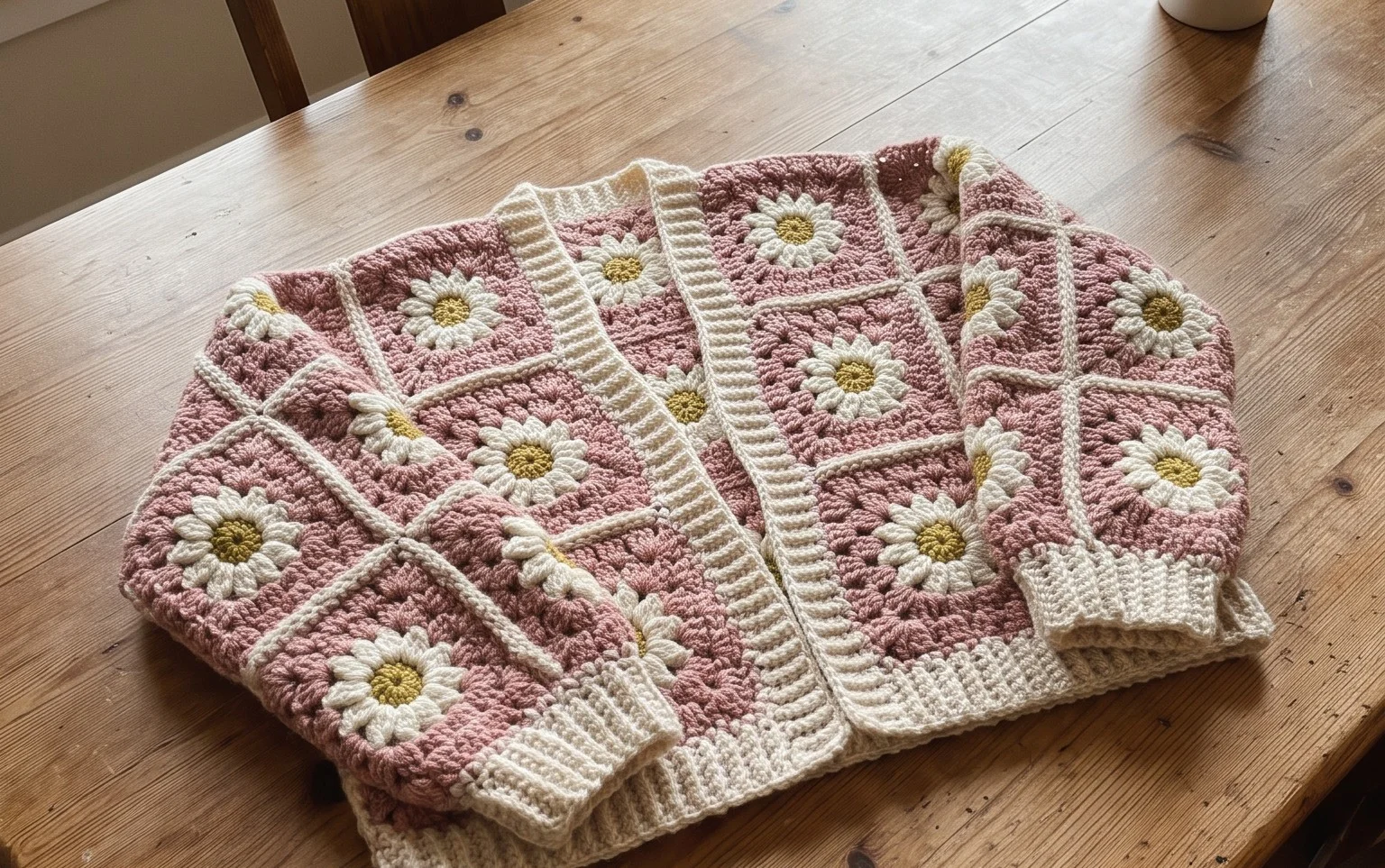
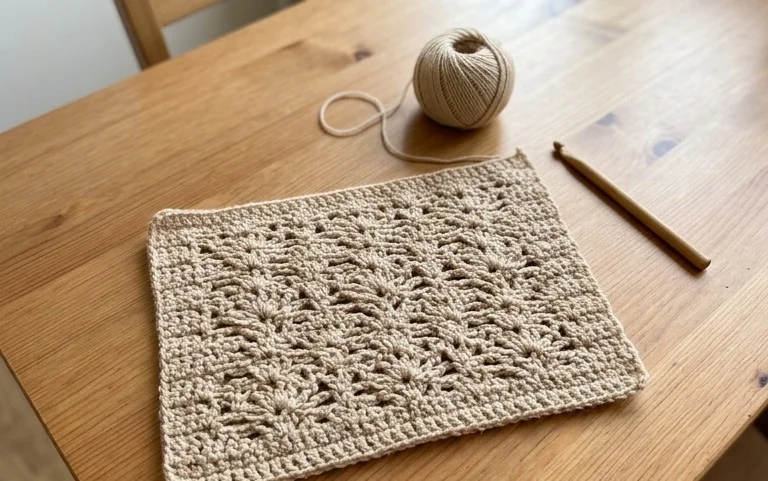
The Classic Crochet Granny Square is the foundation of countless heritage projects, offering a repetitive, meditative rhythm that builds quickly. You can finish a single square in under twenty minutes, making it an ideal choice for using up small amounts of leftover yarn from previous projects. Because the construction uses basic double crochet clusters, it is forgiving for beginners who are still working on maintaining consistent tension. Once you master the join-as-you-go method, you can transform these individual pieces into a blanket of any size, a stylish tote bag, or a decorative pillow cover.
I started this project to use up my scrap bin and ended up making a full throw blanket because the rhythm is so addictive. It is the perfect pattern for low-stress evening stitching.
— Sarah, hobbyist crafter
Pattern Overview & Skill Level
- Skill Level: Beginner
- Approximate Time: 15-20 minutes per square
- Construction: Working in rounds from the center outward
- Finished Dimensions & Sizing: Approximately 5 inches by 5 inches using worsted weight yarn
Materials & Supplies Needed
- Yarn: Worsted weight (#4) acrylic or cotton blend, approximately 15-20 yards per square.
- Hook Size: 5.0 mm (US H-8).
- Notions: Yarn needle for weaving in ends, sharp scissors.
- Safe yarn substitutions: You can use DK weight yarn for a smaller, tighter square, or bulky weight yarn for a larger square. Note that changing yarn weight will significantly alter the final dimensions and require more or less yardage accordingly.
Stitch Guide & Abbreviations (US Terms)
- ch = chain
- st/sts = stitch/stitches
- sl st = slip stitch
- dc = double crochet
- dc cluster = 3 double crochet stitches worked into the same space
- sp = space
- MR = magic ring
Step-by-Step Pattern Instructions
The Granny Square
- Rnd 1: Start with a MR. Ch 3 (counts as first dc), 2 dc in ring, ch 2, *3 dc in ring, ch 2; repeat from * twice more. Join with a sl st to the top of the beginning ch-3. (12 sts)
- Rnd 2: Sl st into the next st and into the first ch-2 corner sp. Ch 3, 2 dc in same sp, ch 2, 3 dc in same sp (first corner made). *Ch 1, skip 3 sts, [3 dc, ch 2, 3 dc] in next ch-2 corner sp; repeat from * twice more. Ch 1, join with sl st to top of beginning ch-3. (24 sts)
- Rnd 3: Sl st into the next 2 sts and into the ch-2 corner sp. Ch 3, 2 dc in same sp, ch 2, 3 dc in same sp. *Ch 1, 3 dc in next ch-1 sp, ch 1, [3 dc, ch 2, 3 dc] in next corner sp; repeat from * twice more. Ch 1, 3 dc in last ch-1 sp, ch 1, join with sl st to top of beginning ch-3. (36 sts)
- Rnd 4: Sl st to the first corner sp. Ch 3, 2 dc, ch 2, 3 dc in same corner sp. *[Ch 1, 3 dc in next ch-1 sp] twice, ch 1, [3 dc, ch 2, 3 dc] in next corner sp; repeat from * twice more. Ch 1, 3 dc in next 2 ch-1 spaces, ch 1, join with sl st to top of beginning ch-3. (48 sts)
Finishing
Fasten off your yarn, leaving a 6-inch tail. Use your yarn needle to weave the tail through the back of the stitches to secure it. If you plan to join multiple squares, leaving a longer tail can be helpful for seaming.
Care & Washing Instructions
- Machine wash on a gentle cycle in cool water (30°C/86°F) if using acrylic yarn.
- Lay the square flat on a clean towel to air dry, reshaping it into a perfect square while damp.
- Avoid using a hot iron directly on the fiber, as this can melt acrylic or distort the stitch definition.
Pro Tips & Common Mistakes to Avoid
Maintaining consistent tension is the most important factor in ensuring your squares have uniform sizes. If you find your squares are curling, you are likely pulling your yarn too tightly; try moving up a hook size. Always place a stitch marker in the first stitch of every round to keep track of where to join your slip stitch. When weaving in your ends, run the needle through the base of the stitches on the back side of the work to ensure the tails remain hidden and do not poke through to the front.
Frequently Asked Questions
Can I use a different hook size to change the size of the square?
Yes, increasing your hook size will create a larger, looser square, while decreasing it will result in a smaller, firmer fabric. Keep in mind that a larger hook will require slightly more yarn to complete the same number of rounds.
Is this pattern suitable for someone who has never crocheted before?
This is a classic beginner pattern. It uses only the double crochet stitch and chaining, which are the fundamental building blocks of almost all crochet projects.
How do I adjust the size of the finished square?
To make the square larger, simply repeat Round 4 until the piece reaches your desired dimensions. Just remember to add a 3-dc cluster into every ch-1 space along the sides as the square grows.
Can I sell items made from this pattern?
You are welcome to sell finished items created with this pattern. We suggest including a link back to this tutorial if you are listing your items online.
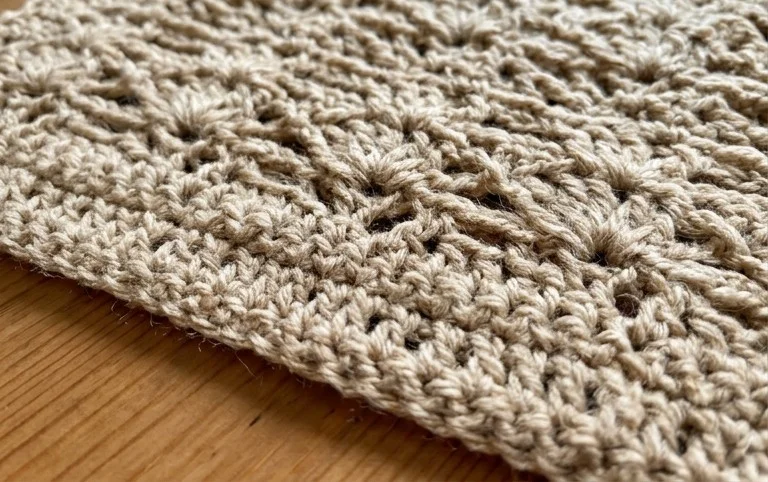
Your finished square now carries the character of your personal color choices and tension. Try swapping your yarn for a variegated cotton blend to create a unique color-changing effect that adds visual interest to a larger throw blanket. Sharing a photo of your progress on social media helps other makers see how different color palettes change the look of the design. You can find more free patterns and project guides on our blog to keep your hands busy with new stitch experiments throughout the coming weeks.